
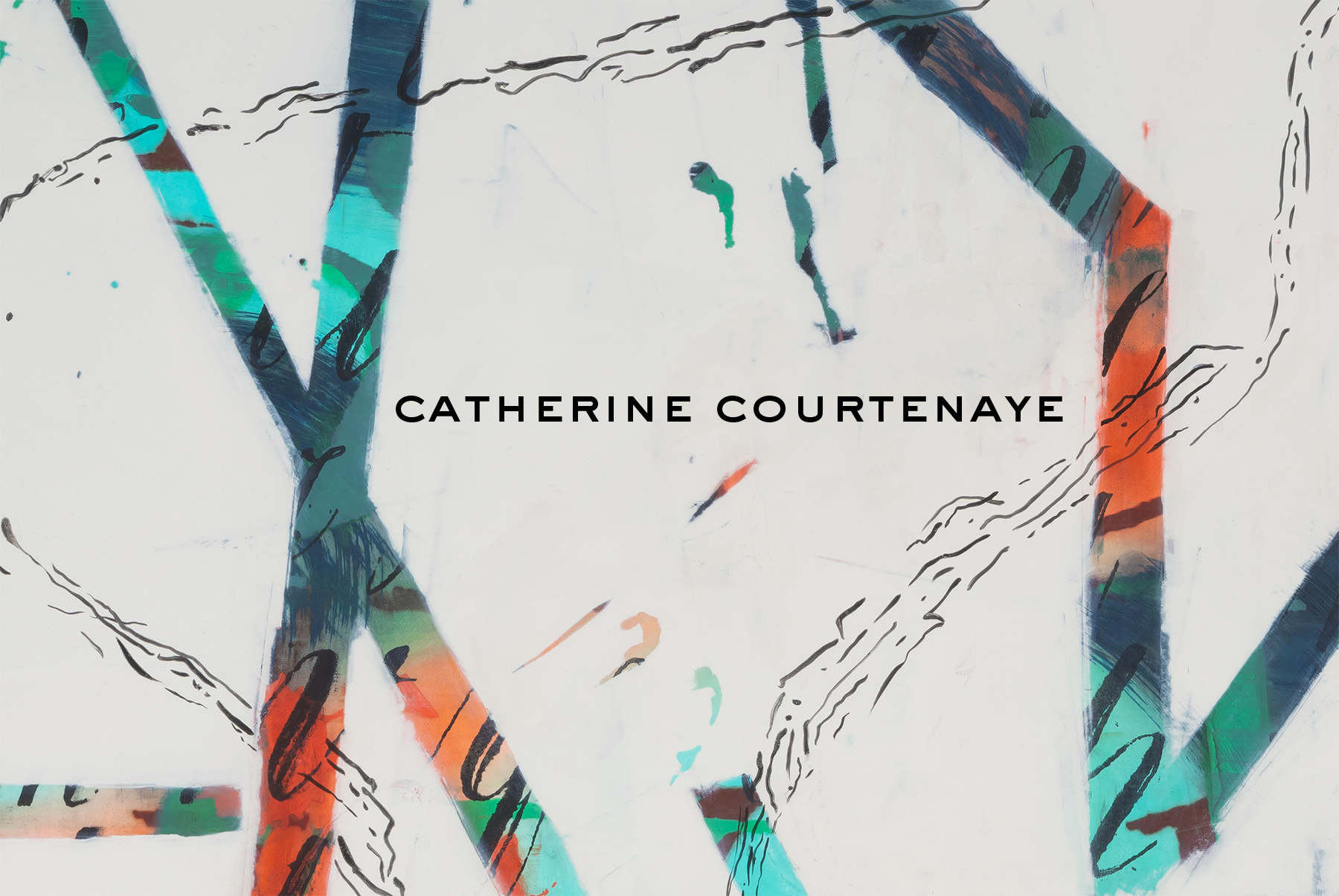
detail: Forest Management, 2025, oil on canvas, 40 x 40 inches overall. Private collection.
The common nighthawk “often seen high in the air, flies with easy strokes, ‘changing gear’ to quicker erratic strokes….Often seen in the air over cities, towns.”
— Roger Tory Peterson, Western Birds
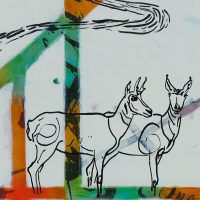
8/ Sightings
What is “habitat”? For the elusive pronghorn antelope, it’s prairie grasslands, high desert sagebrush steppes, and mountain valleys. This series of paintings depicts the species in a range of landscapes and seasons, and even in the growing subdivisions of the American West. From my pen-and-ink drawings, silkscreens are generated so that I may print multiples across a range of unique environments depicted through abstraction. Embedded in the layers of paint are also fragments of homesteader-era scripts, in the days when the pronghorn could range more freely.
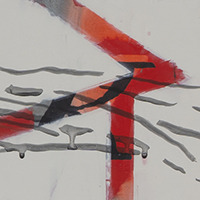
7/ Redrawn Topographies: Human and Wild Imprints on the Land
The map-like, aerial views of these paintings develop an abstract language to communicate the dissonance between nature and human development. Inspired by living in the Greater Yellowstone Ecosystem, I contemplate the primordial force of migrating animals and their challenges.
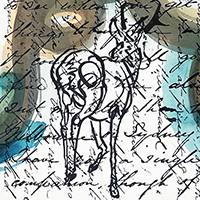
7a/ Works on Paper
These works on paper begin with silkscreen printing many layers of historical handwriting facsimiles. Nineteenth-century penmanship lessons involved repeated lines of alphabets or aphorisms. Drawing North American pronghorn on top of the silkscreen prints recontextualizes the source materials, and transforms them into the barbed wire fencing that began to cordon off vast swaths of the West in the 1870s. Another artifact from this era is cross-writing, often used in correspondence to save paper and postage. In my work it mimics sheep fencing, also a barrier to pronghorn migration.
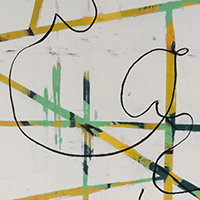
6/ Avian Witness
With imagery and methodology derived from my previous works, this series contemplates primordial systems—such as bird migration, magnetic fields and wind—and their relationship to manmade patterns on the land. Source materials, some embedded beneath layers, are wide ranging, including the gestures of penmanship, my pen-and-ink drawings of birds, and aerial landscape views.
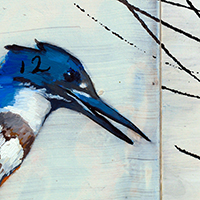
5/ Specimens
In this series, my interest in the evolution of written language—encompassing hieroglyphics, rebus riddles, and phonograms—led me to incorporate common Western birds into otherwise abstract works. The paintings seek some sort of equivalence between letterforms, various species of birds, and pure gesture.
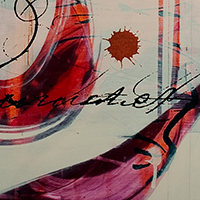
4/ Subtext
Exploring parallels between drawing/painting/handwriting/markmaking, this group of paintings magnifies intimate handdrawn marks into more explosive gestures. Bold brushy lines, derived from cursive letterforms, become conduits of space, providing glimpses into the many strata that lie beneath the surface of each painting. Several paintings open up and complicate the stripped down efficiency of texting acronyms.
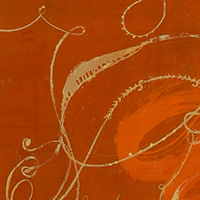
3/ Lineage
This series builds on the previous by introducing broad hand-drawn or painted gestures to reflect or play with transferred letterform fragments. The paintings, appearing abstract from a distance, are map-like upon closer view. Overall patterning emerges from repeating linear elements.
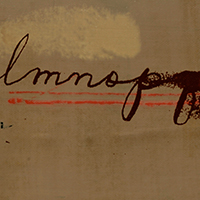
2/ Rules & Deviations
In this group of paintings, I am especially interested in ferreting out instances of deviation from Victorian writing standards. These tiny gestures express an improvisatory spirit at odds with strict rules of stylistic conformity. Here one can see the human impulse to let the mind stray, with pen in hand. My handdrawn meandering lines play with appropriated text and scribbles within each painting.
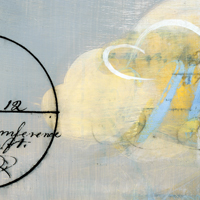
1/ Landscapes of Penmanship
Based on my exploration of 19th-century vernacular penmanship, these works contain vestiges of elementary mark-making. Alphabets, signatures, equations, doodles serve as counterpoints to my looser treatment of line, edge and space. The text is merged into the overall atmosphere of the paint, resulting in works evoking both landscape and pages of books. While we think of doodles as free from any rules, one can see an indelible residue of proper penmanship. The tension between forced conformity and unfettered meandering plays itself out in these paintings.