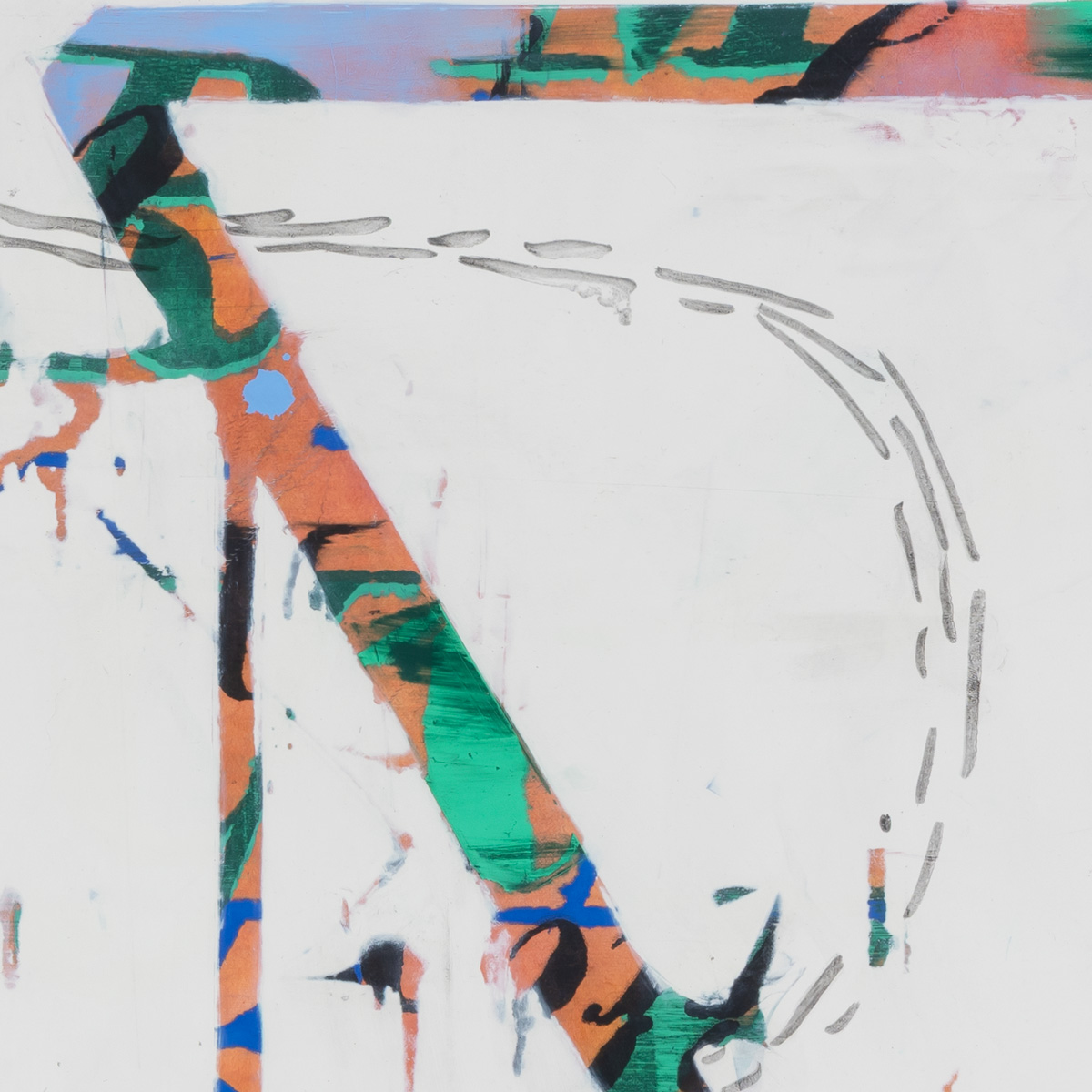
detail, Circuits Seen and Unseen
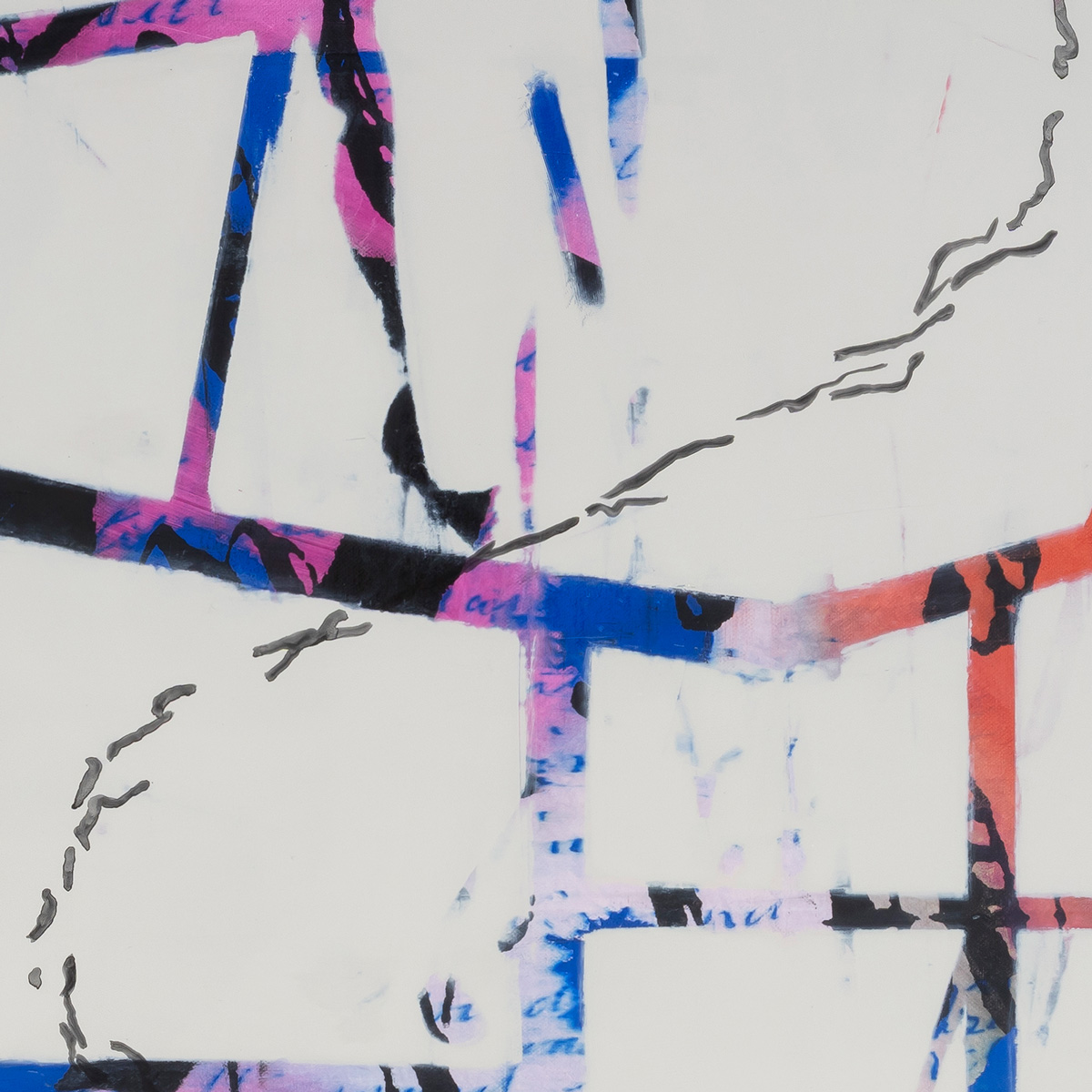
detail, Fugitive Passage
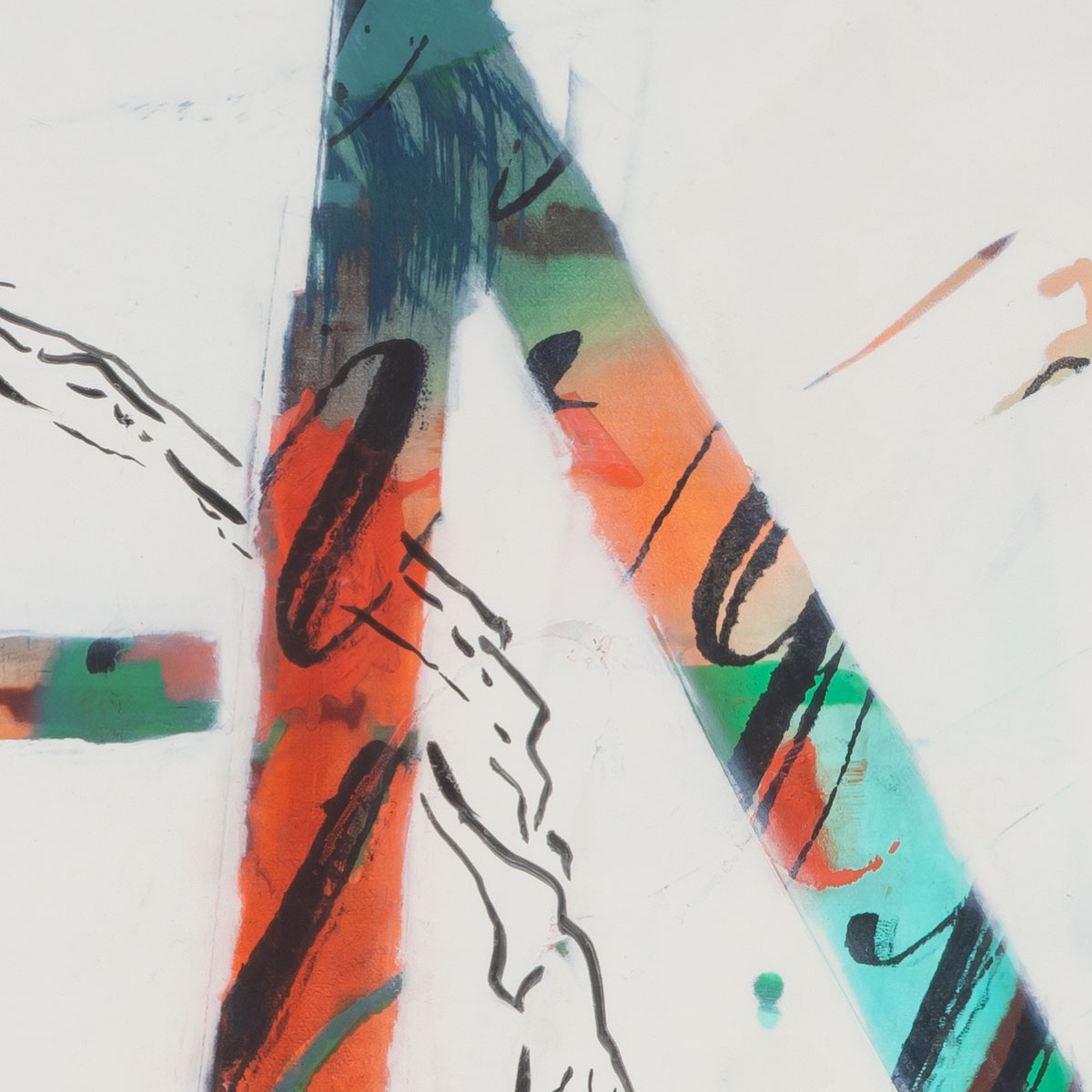
detail, Forest Management
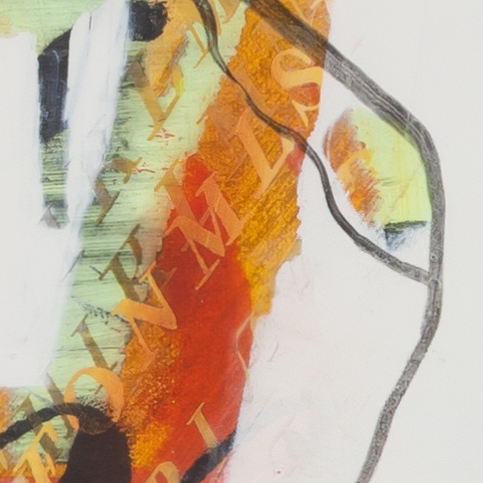
detail, The Rites of Autumn
statement
Redrawn Topographies: Human and Wild Imprints on the Land
Wild migration is to me a quasi-mystical phenomenon that inspires my current work above all else.
With their map-like views, recent paintings employ an abstract language for communicating the dissonance between natural patterns and human infrastructure. Inspired by living in the Rocky Mountain West, I contemplate the primordial force of migrating animals. Subdivisions, highways, fences, power lines, and other man-made interventions—expressed through the rectilinear patterning in the paintings—are increasingly disrupting the ancient routes of wild movement. Not just a Western reality, this is a planetary concern.
The vibrant colors and intricate details of the geometric bands in my work evoke the nuanced complexity of human development and culture over time, from ancient indigenous footpaths to superhighways. The underlayers begin with silkscreened facsimiles of 19th-century handwritten text. These letterforms symbolize language and culture, and bits of black text peek through to the surface of finished paintings. There is an element of concealment: careful looking at these works suggests much that lies beneath the surface. Our “curated” official histories of the land often delete uncomfortable truths.
On the uppermost layers, curvilinear drawn lines reference the migratory movement of animals such as elk, pronghorn, bison, and mule deer. Critical to wildlife abundance, this seasonal phenomenon is driven by the search for forage and mates.
Drawing and redrawing abstracted and imagined wildlife trails, I explore varieties of marks and texture to indicate direction, dispersal, and regrouping. Works on paper utilize many layers of printed handwriting which transform to reference the barbed wire fencing that fragments habitat. While creating these works, I envision how human development and natural forces might coexist in harmonious ecosystems.